

A versatile triple-play terminal with 1 GE port, 1 FE port, Wi-Fi, and a POTS port for voice services.
Netlink OLTs (Optical Line Terminals)
OLTs serve as the central hub in a passive optical network, managing data distribution to multiple ONUs. Netlink OLTs typically come in 1U rack-mount designs.
GPON OLTs (V1600G Series):
V1600G0: A 4-port GPON OLT supporting up to 512 ONTs with a 1:128 splitting ratio.
V1600G1: An 8-port GPON OLT with Layer 3 switching capabilities and support for redundant power modules.
EPON/GEPON OLTs (V1600D Series):
V1600D4: A 4-port EPON OLT supporting up to 256 ONUs.
V1600D8: An 8-port model capable of supporting 512 ONUs.
V1600D16: A high-capacity 16-port OLT for larger deployments. Protection: A protective sleeve is applied and heated to shrink over the splice point, providing mechanical strength and environmental protection.
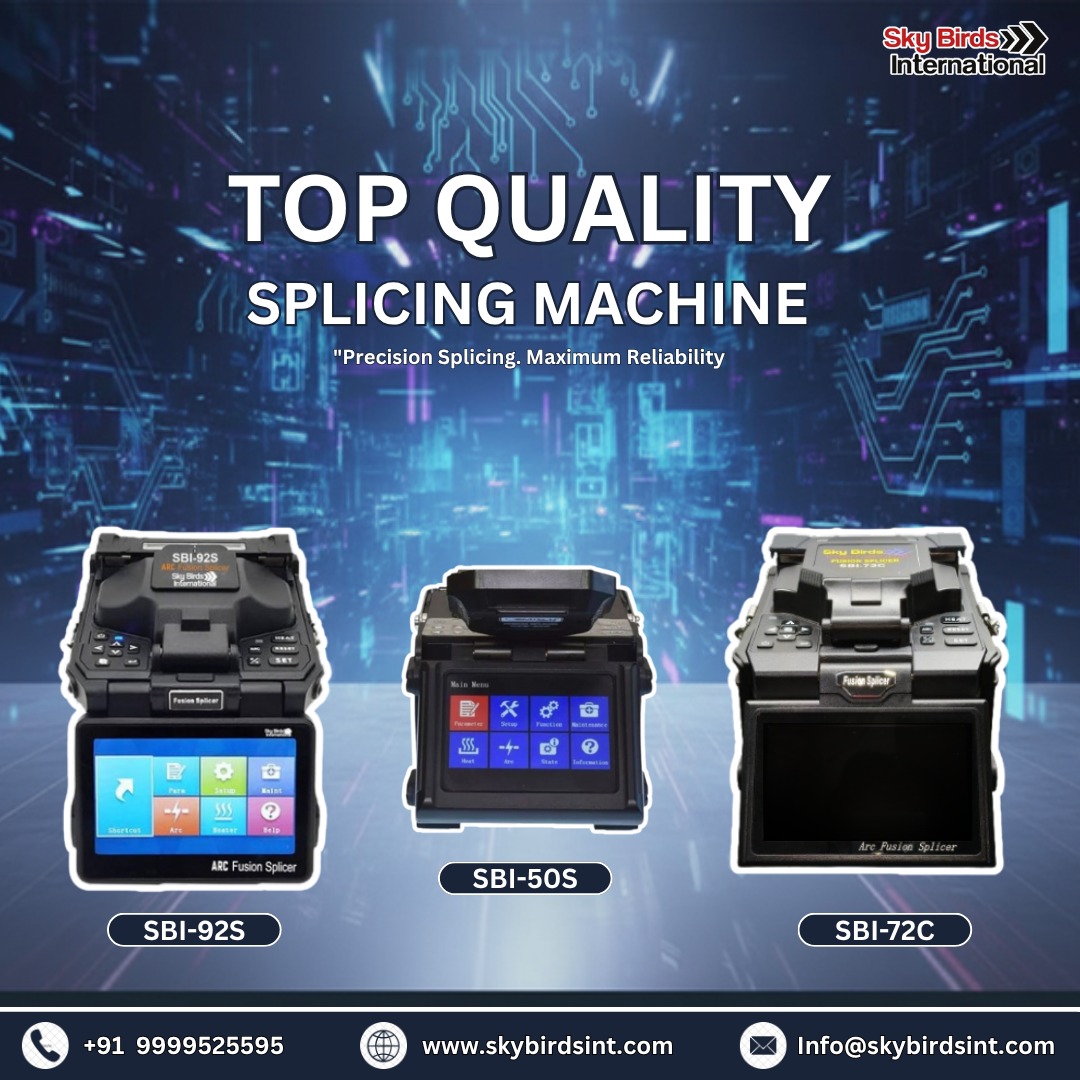
Types of Splicing Machines
The primary distinction between splicers lies in their alignment method:
Core Alignment Splicers: These use advanced cameras and algorithms to align the actual fiber cores, ensuring minimal signal loss (typically 0.02dB for SMF). They are ideal for demanding applications like long-haul networks and data centers where low loss is critical, but they are generally more expensive. Models include the Fujikura 88S+ and Sumitomo Z2C.
Cladding Alignment Splicers: These align the fibers based on their outer cladding diameter using a V-groove mechanism. They are faster, more cost-effective, and often used for FTTH installations where budget constraints and speed are more significant factors than achieving the absolute lowest loss. Models include the Sumitomo S1V.