

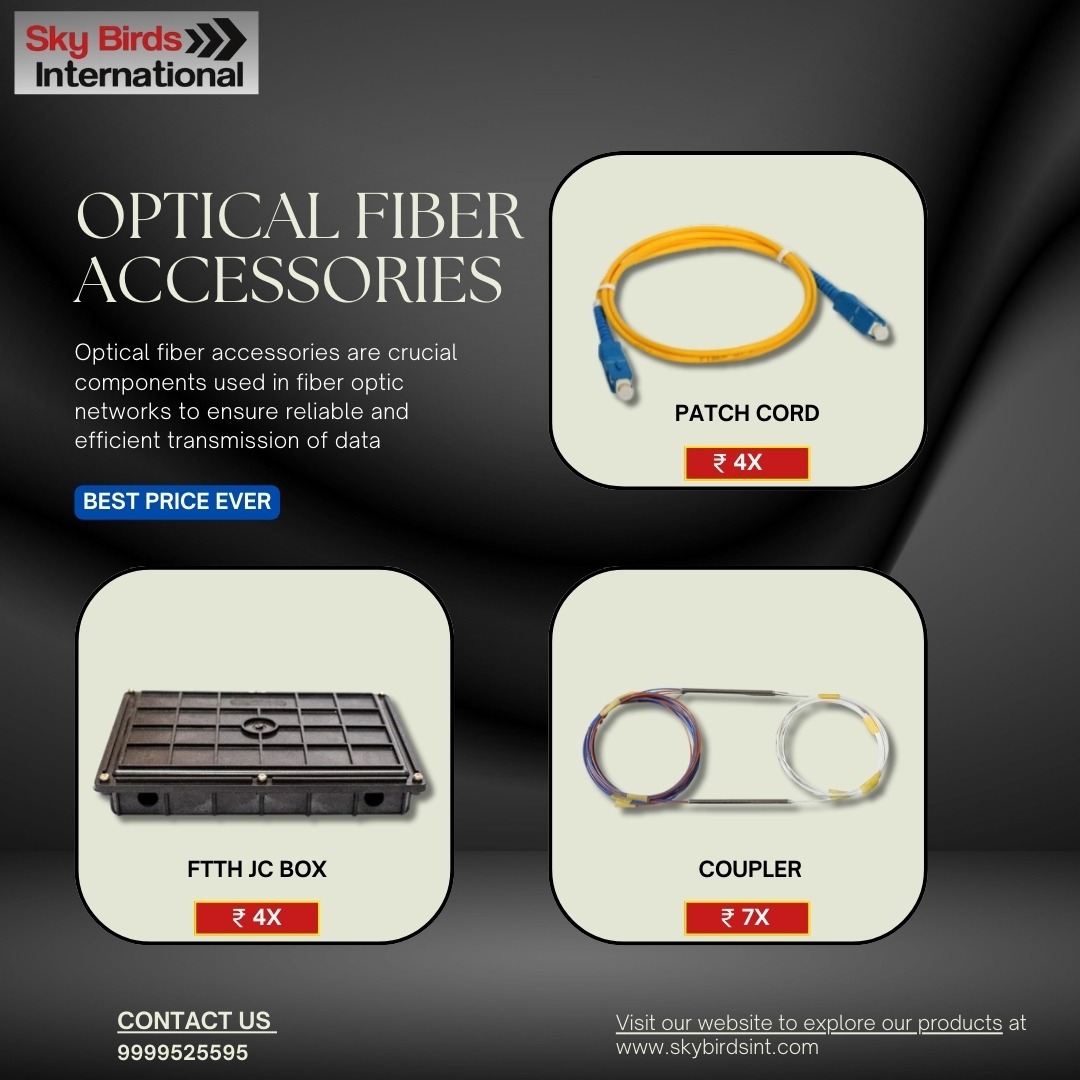
Optical fiber accessories are essential components and tools used to install, maintain, and manage fiber optic networks, ensuring reliable connections and protection for the delicate fibers. They range from connectivity hardware to organization and testing tools.
Connectivity and Interconnection Components
Fiber Optic Connectors: These components enable the quick connection and disconnection of fiber cables to equipment or other cables. Common types include:
LC (Lucent Connector): A small form-factor, high-density connector popular in data centers and enterprise networks.
SC (Subscriber Connector): Features a push-pull design and is widely used in FTTx and telecommunications networks.
FC (Ferrule Connector): A screw-type metal connector often used in precision instruments like OTDRs due to its secure fit.Fiber Optic Adapters/Couplers: Also known as flanges, these align and connect two connectors of the same type (e.g., SC-SC) or different types (e.g., SC-LC hybrid). They utilize ceramic sleeves for precise alignment and low insertion loss.
Patch Cords and Pigtails:
Patch Cords: Fiber optic cables pre-terminated with connectors on both ends, used for patching connections between patch panels, terminal boxes, and network equipment. They typically have a robust jacket for durability.
Pigtails: Short cables with a connector on only one end. The bare end is fusion spliced to an incoming cable in a splice enclosure or terminal box, allowing for a high-quality, factory-polished connection to be used in the field.
Fiber Optic Splitters: Passive optical components that divide a single optical signal into multiple signals or combine multiple signals into one. They are fundamental to Passive Optical Networks (PON) and FTTx distribution.Installation and Testing Tools
Fiber Strippers: Hand tools used to safely remove the outer jacket, buffer, and coating layers of the fiber without damaging the delicate glass core.
Fiber Cleavers: Precision tools that make a perfectly flat, 90-degree cut on the fiber endface, essential for a low-loss splice or connector termination.
Cleaning Kits: Essential supplies like lint-free wipes and high-purity isopropyl alcohol for cleaning fiber endfaces before connection or splicing, preventing signal loss from contaminants.
Visual Fault Locators (VFLs): Handheld lasers that shine a visible red light into the fiber, making breaks, sharp bends, or faulty splices glow red for easy visual identification.
Optical Power Meters (OPMs): Diagnostic tools that measure the strength of the light signal passing through the network to verify performance and troubleshoot signal loss issues.
Fusion Splice Protection Sleeves: Heat-shrinkable tubes with a strength member that cover the completed fusion splice, providing mechanical protection and strain relief.